
Newsworthy
-
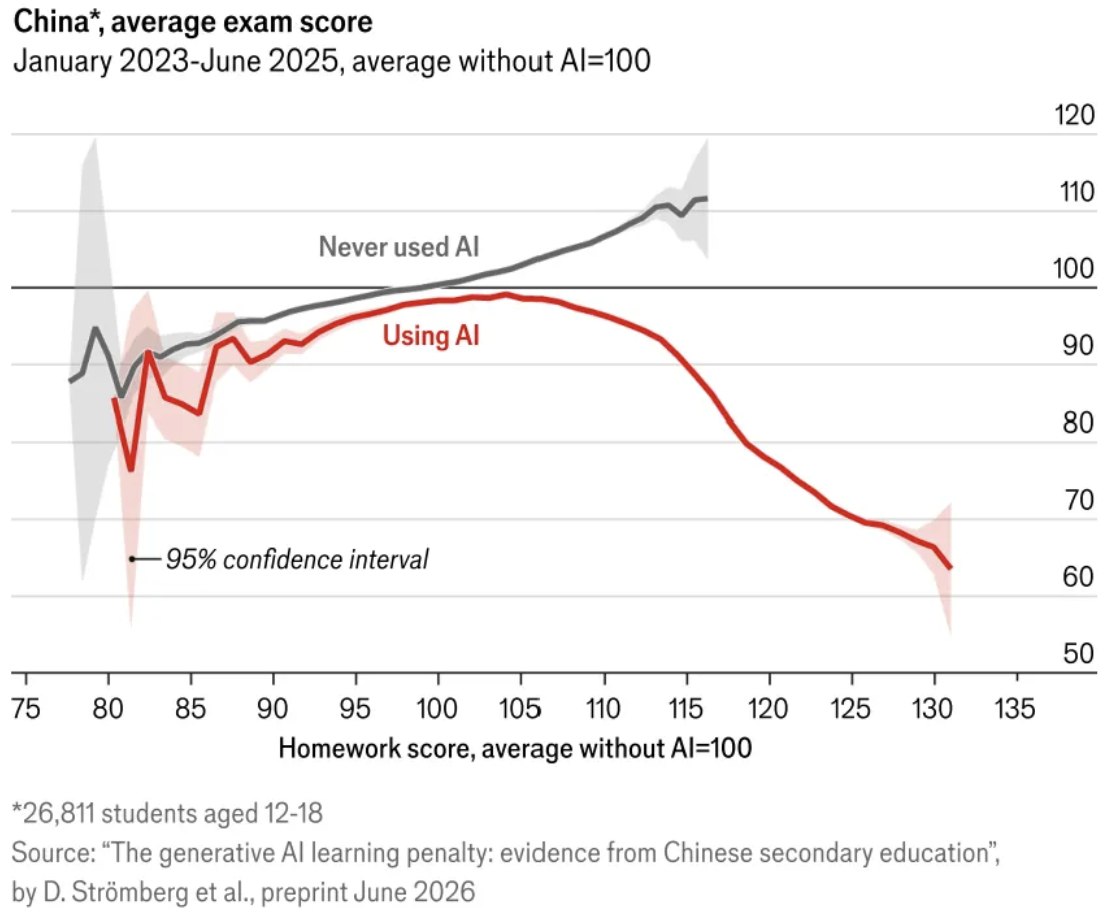
Evidence of the Educational Harms of Generative AI
Over 27,000 students between 2023-2025 were studied on the use of generative AI. This compelling article breaks down the findings so they’re easy to understand in writing and visually. “…findings show that generative AI…has a substantial negative impact on student learning.”
-
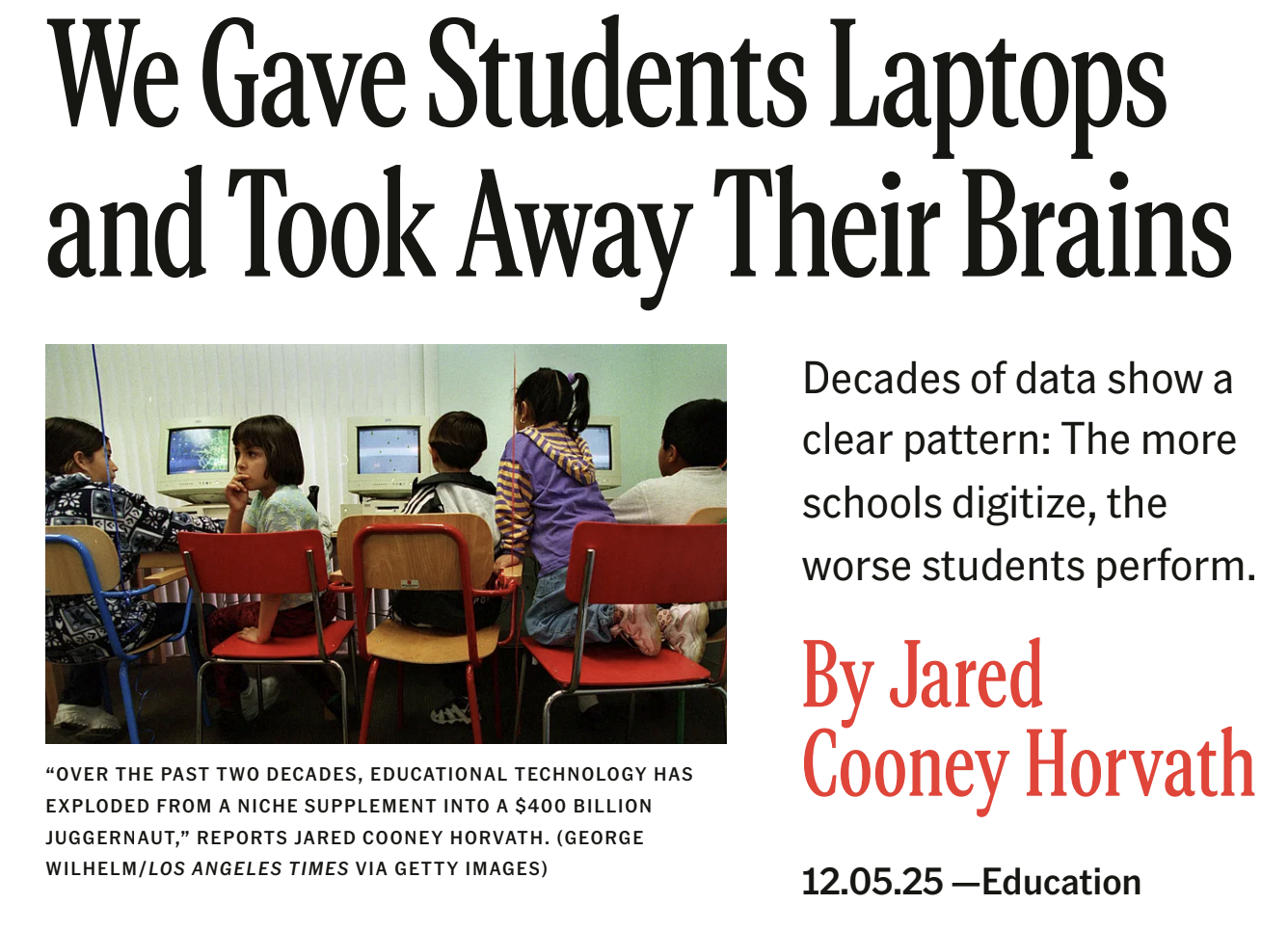
Article on the Impact of Educational Technology in Schools
An exclusive, adapted excerpt from the book, “The Digital Delusion: How Classroom Technology Harms Our Kids’ Learning", answering an urgent question: Why, after generations of progress, are today’s children less intellectually capable than their parents?
-

New York Times (Gift) Article August 26, 2026 Meta to Pay Up to $17.1 Billion in Landmark Settlement Over Social Media Addiction Claims
The social media giant settled with 47 states, the District of Columbia and U.S. territories, and agreed to make major changes to its products over claims its platforms endangered children.
-
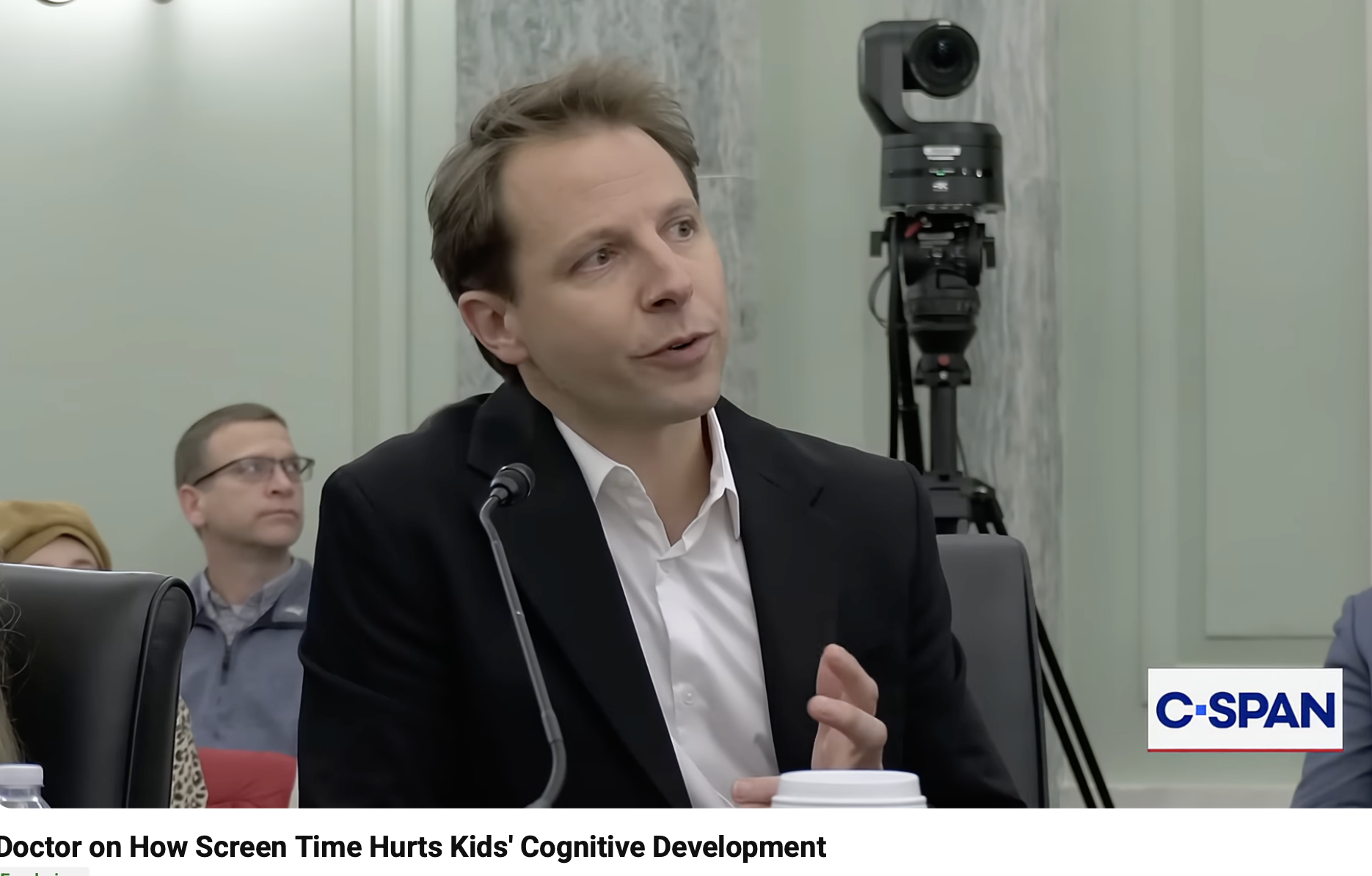
January 9, 2026 - Dr. Jared Cooney Horvath testifies before congress on the negative effects of screens on learning, providing compelling data.
-
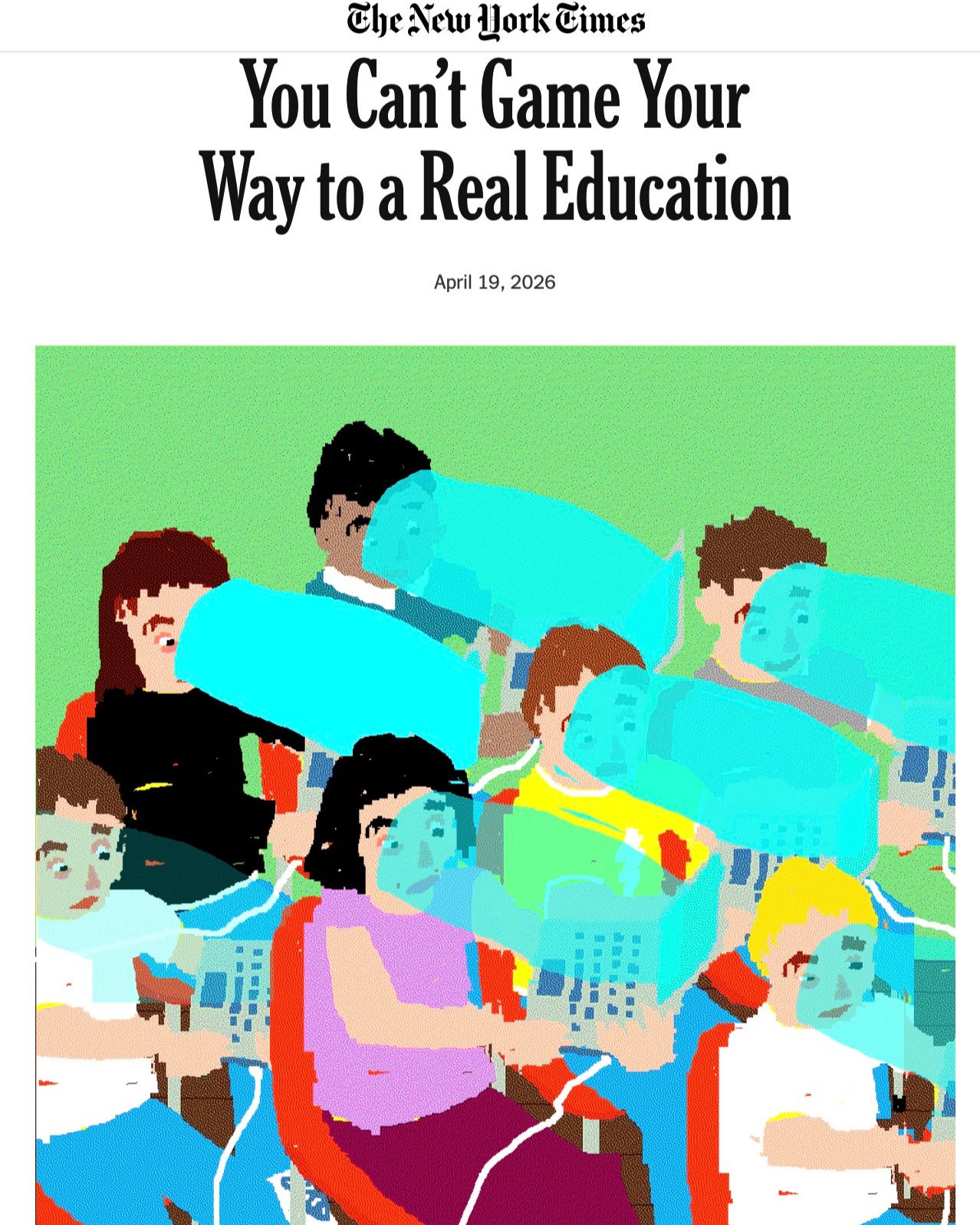
"You Can’t Game Your Way to a Real Education" NYT, April 19, 2026
Comprehensive article with links to data about the proliferation of educational technology, and the effects of gamification and screen use in education.
-
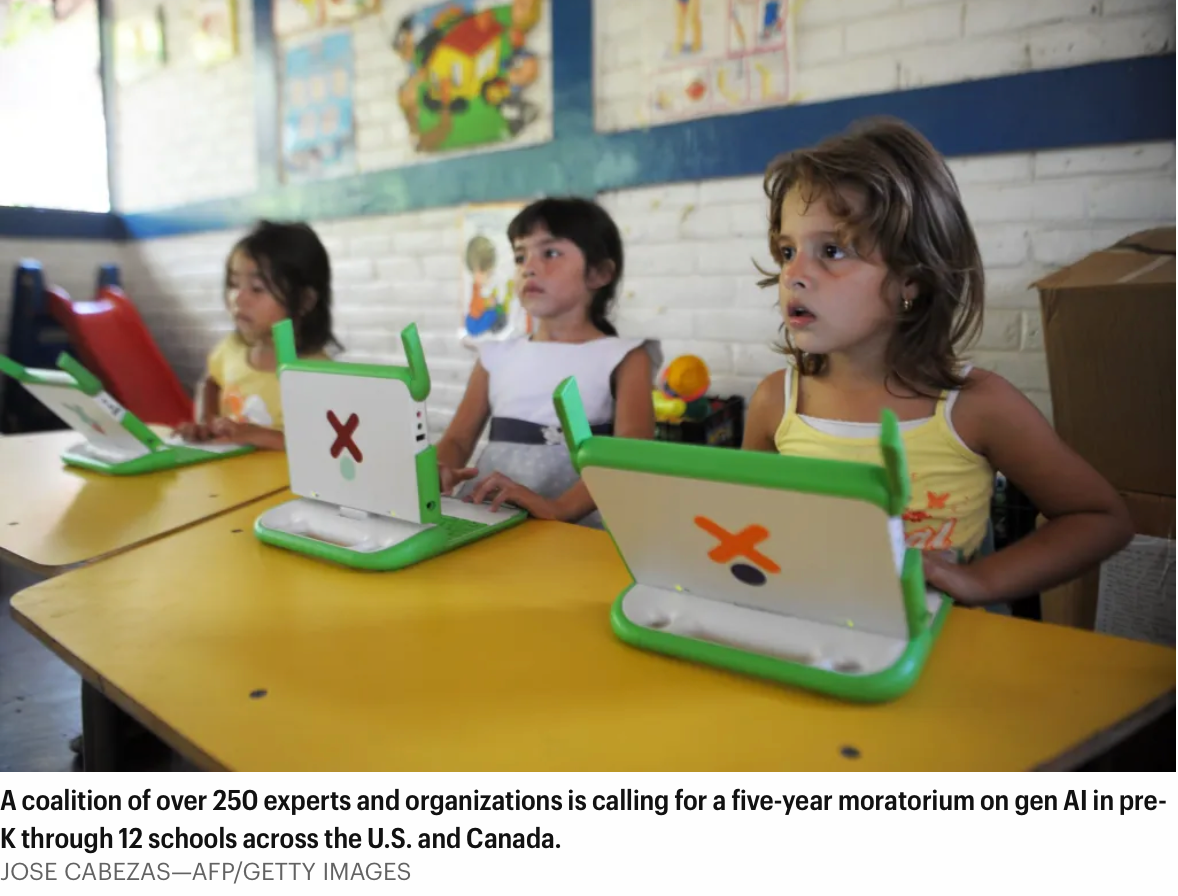
Doctors and education experts who studied AI’s impact on the young call for a 5-year moratorium in schools, Fortune, April 16, 2026
Researchers, doctors, and child development experts have studied what generative AI does to developing brains. Their conclusion: It shouldn’t be anywhere near a classroom, and action should be taken immediately.
-
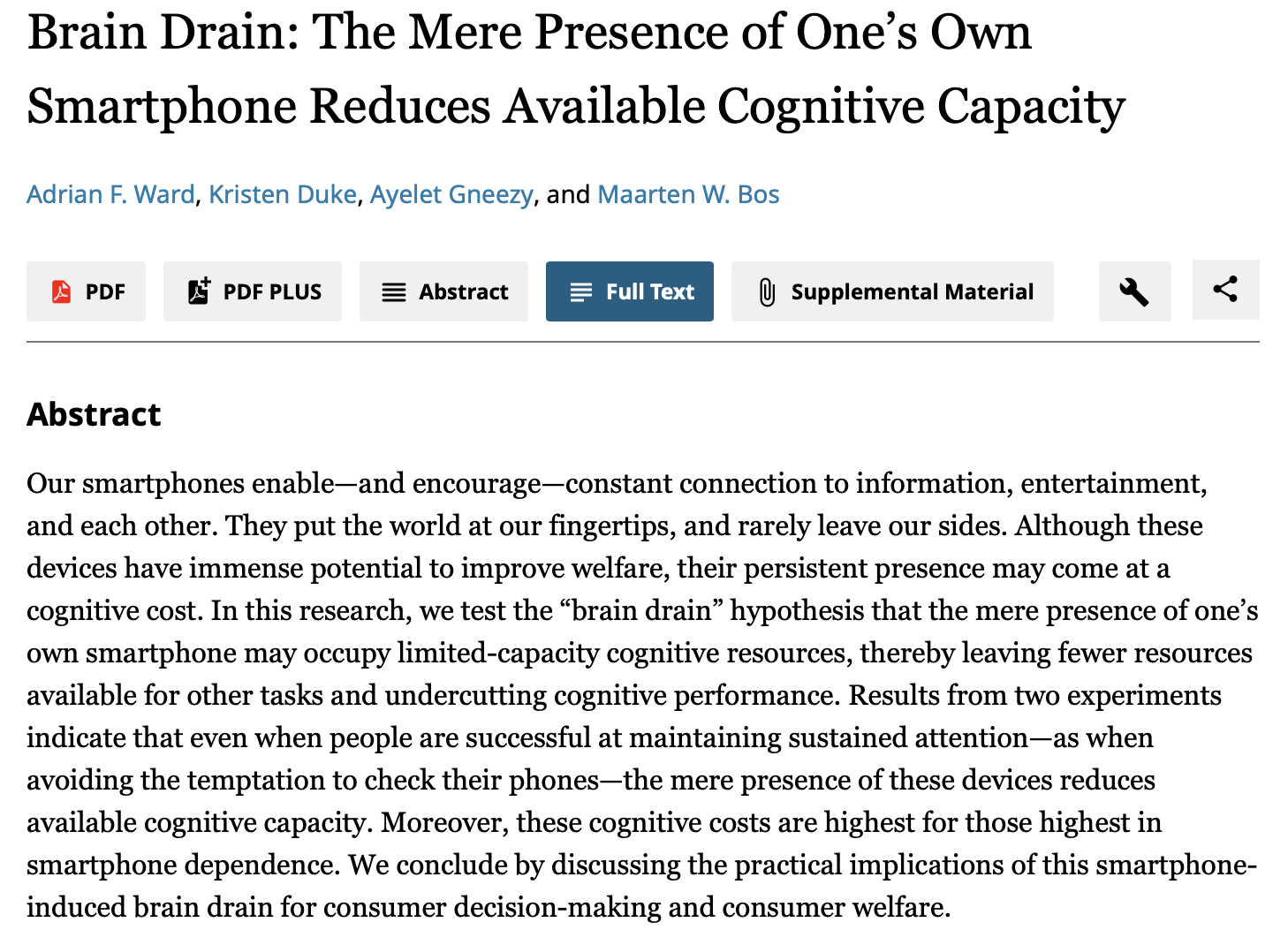
The "Brain Drain" Study
This study found, using two different experiments, that the presence of a smartphone, whether face up or face down on a desk, on silent, or powered off entirely, still affected a person’s cognitive capacity. In fact, even putting it away in a backpack, turned off, didn’t help. From the article:
“…suggesting that intuitive “fixes” such as placing one’s phone face down or turning it off are likely futile. However, our data suggest at least one simple solution: separation.”
-

Mass. AG pushes for bell-to-bell cellphone restrictions in schools
Attorney General Andrea Campbell said the "Study Act" will let kids learn without distractions and will hold social media companies accountable for the uptick in depression, anxiety and self-harm. "There's no statewide policy. This bill would mandate that every district develop one," Campbell said.
-
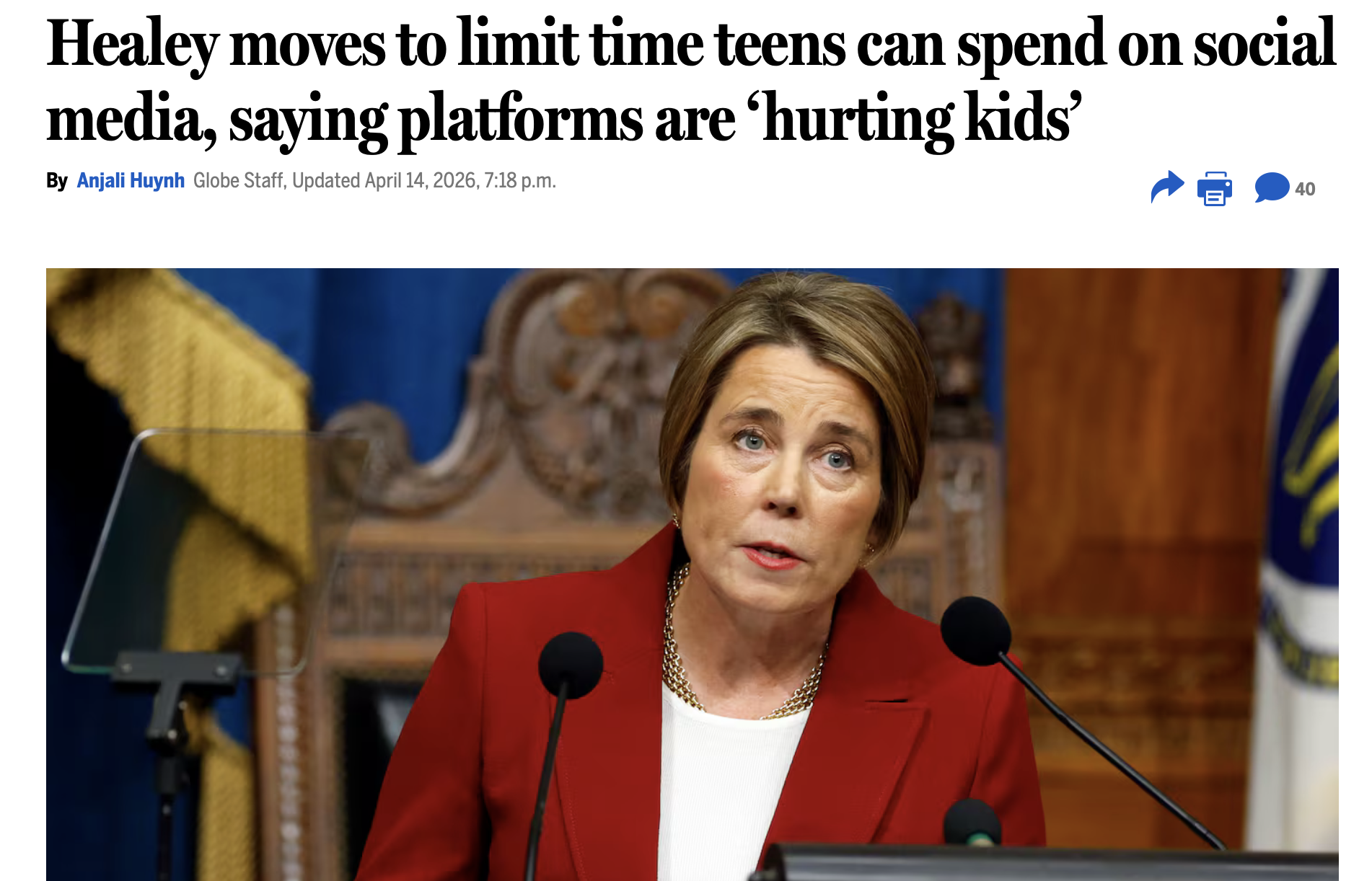
MA Governor moves to limit time teens can spend on social media, saying platforms are ‘hurting kids’, Boston Globe, April 14, 2026
Governor Maura Healey added to a sudden surge on Beacon Hill to rein in technology’s influence on children and teens, unveiling a proposal to restrict the amount of time minors can spend on social media platforms that she and other officials assailed as exploitative and addictive.
-
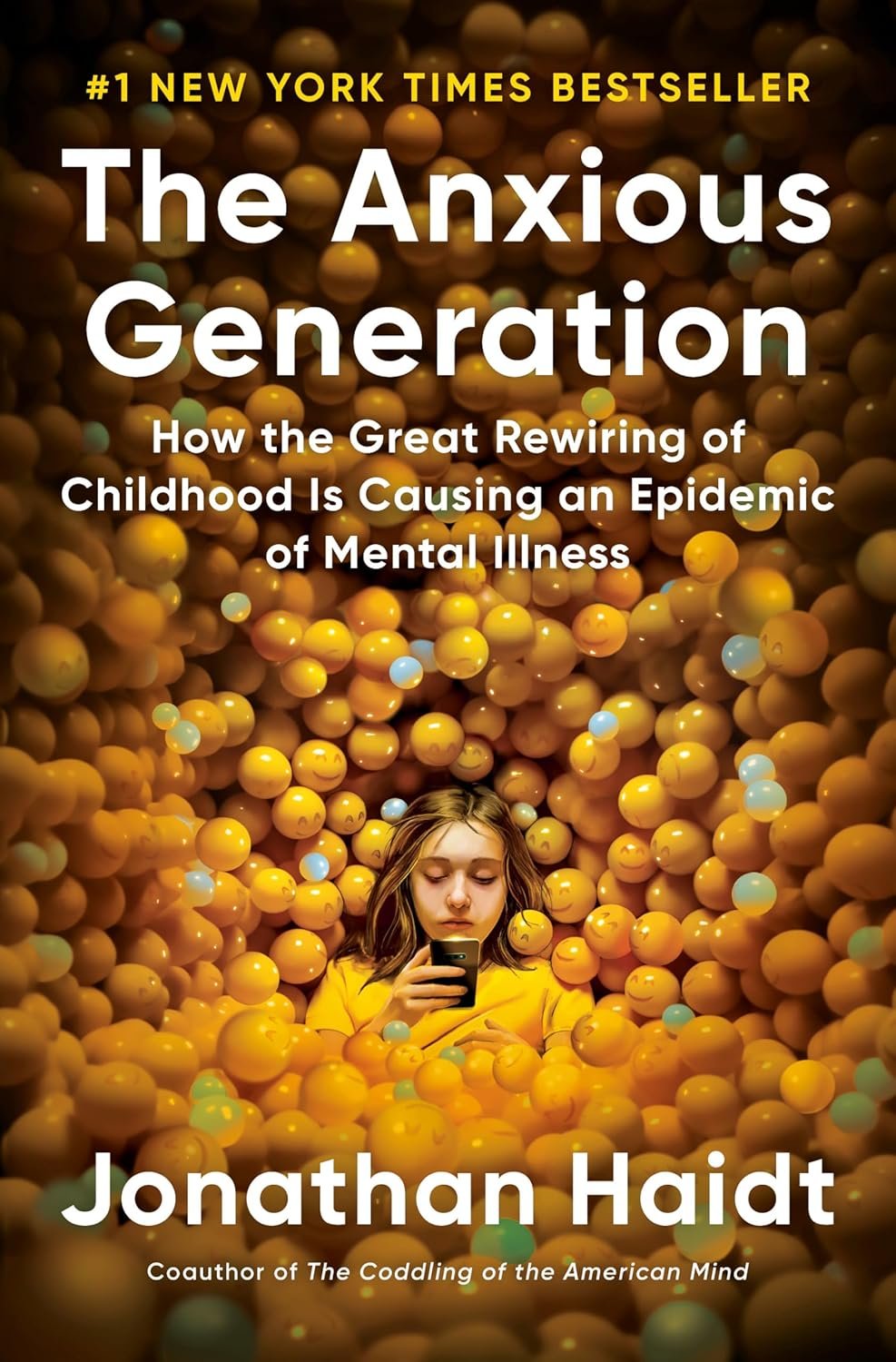
The Anxious Generation
Free The Anxious Generation was created to motivate and empower teens, parents, educators, policymakers, and tech industry leaders to act collectively to free children and adolescents from a childhood spent largely alone on screens, and instead promote independence, free play, and responsibility in the real world.
-

Catherine Price: Kids, Smartphones and Social Media: The Risks and The Solutions
A talk given by Catherine Price, author of How to Break Up With Your Phone and founder of Screen/Life Balance, about children, smartphones, and social media. She provides new frameworks for decision-making, runs through the risks that exist for children online and — most importantly — offers practical solutions for parents and families. More information at catherineprice.com and catherineprice.substack.com
-

Social Media and Youth Mental Health: The U.S. Surgeon General’s Advisory
Social media use among young people is nearly universal, with up to 95% of teenagers, and even 40% of children aged 8-12, on social media.1,2 Despite this widespread use among children and adolescents, we do not yet have enough evidence to determine if social media use is sufficiently safe for them—especially during adolescence, a particularly vulnerable period of brain development.
-

Social Media Needs Warning Labels: Q&A With Surgeon General Vivek H. Murthy, MD, MBA
Social media is the focus of the US surgeon general’s conversation with JAMA Editor in Chief Kirsten Bibbins-Domingo, PhD, MD, MAS. She interviews Vivek H. Murthy, MD, MBA, to discuss the dangers of social media on youth mental health, highlighting its contribution to the epidemic of loneliness.
-

The effect of cellphones on attention and learning: The influences of time, distraction, and nomophobia
Having a phone impairs attention and subsequent memory during lectures.